THE ABR PROGRAM

The Responsible Brazilian Cotton program

The Responsible Brazilian Cotton Program (ABR) is the national standard for social and environmental certification for cotton farming in Brazil and its main aim is to promote responsible practices throughout the production chain.

Set up in 2012 by the Brazilian Cotton Growers Association (Abrapa), ABR is based on the concept of continuous improvement. From one crop season to the next, the certified farms are encouraged to improve their sustainability management

OUR PURPOSE

Our purpose is to advance a sustainable future by promoting responsible cotton production, protecting workers’ well-being, preserving natural resources, strengthening climate resilience, and supporting the balanced growth of communities and ecosystems.

See our manifesto, which summarizes the theory of change applied to ABR!

MAIN CHARACTERISTICS OF ABR

Joining the protocol is voluntary and is done by farmers who wish to undergo auditing and certification of the good social and environmental practices on their farms.
Participants must strictly comply with current environmental, land ownership and labour laws in Brazil, as well as the standards laid out by the International Labour Organization (ILO).
ABR was set up by Abrapa following the unification of regional initiatives for standardizing social and environmental practices. Abrapa is responsible for running, coordinating and disseminating the program, and has the direct support from the technical staff of its affiliated state associations.
Every year, participating farms undergo annual on-site audits. This step is conducted by companies that specialize in this service and is done independently and transparently.
The items verified by the ABR protocol cover environmental, social, and economic aspects of cotton production in Brazil.
Based on Brazilian legislation, the Responsible Brazilian Cotton protocol is rigorous and covers a series of items that need to be verified by the farmer.
Since 2013, Abrapa and Better Cotton (BCI) have cooperated to validate the ABR verification items which are similar to those required for Better Cotton certification, the global standard for cotton sustainability.
The high level of engagement of Brazilian growers is one of the strengths of the ABR protocol. Every year, participation has been increasing and in the 2023/2024 crop season, it reached 83% of all cotton growing in the country.
Recognized and certified by Better Cotton, ABR is one of 15 global certifications selected by Textile Exchange as being preferred in the global market.
Those who obtain ABR certification must demonstrate that their level of compliance improves from one crop season to the next. This is a commitment to the continuous evolution of processes and practices in the field.
PILLARS OF ACTION

Three fundamental pillars guide the actions of the Responsible Brazilian Cotton Program (ABR), establishing specific guidelines as well as the criteria and requirements necessary for certification.

The ABR pillars were established to take into account the importance of balancing production efficiency with environmental preservation and social well-being, incorporating areas of importance for Brazilian cotton farming:

Environmental Management

  • Soil health
  • Integrated Pest Management
  • Biodiversity conservation
  • Climate adaptation and mitigation
  •  Water resources management

Social and Community Development

  • Worker’s health and well-being
  • Freedom of association and collective bargaining
  • Local development
  • Eradicating all forms of child labour and forced labour
  • Promoting Diversity and Inclusion, especially in terms of gender

Good Governance Practices

  • Commitment to transparency
  • Compliance with environmental standards and legislation
  • Ensuring respect and promotion of the rights of workers and local communities, and alignment with the International Labour Organization’s (ILO) standards
  • Full product traceability
CRITERIA

To meet the certification requirements, it is necessary to fulfil the conditions of nine criteria that are aligned with Brazilian and international legislation in addition to demonstrating the best sustainability standards in cotton growing.

0

verification items are incorporated in the ABR Program which have to be verified by the farms wishing to be part of the protocol. In each crop season, they are re-assessed to ensure a constant improvement in accordance with market and legal demands.

State Associations

The Brazilian Cotton Growers Association (Abrapa) runs the Responsible Brazilian Cotton Program (ABR) nationally, but it is the 11 affiliated state associations who execute the program on the ground.

These associations support local growers, disseminate good agricultural practices, ensure certification quality and strengthen Brazilian cotton farming. They also run social projects and initiatives that impact communities located near to farms.


Click on each state association to learn more!
TRACEABILITY

The quality and the credibility of Brazilian cotton growth is driven by traceability initiatives that have been developed and supported by the Brazilian Cotton Growers Association (Abrapa) within the scope of the Responsible Brazilian Cotton Program (ABR). These initiatives ensure a competitive advantage for the country's cotton farming.

They allow for monitoring of the production chain, ensuring transparency, security and compliance with socio-environmental standards. This means brands and consumers can trust that they are acquiring a responsibly-madee product which is committed to good agricultural practices.

SOUABR (“I´m ABR”)

As a result of partnering with major brands, the SouABR (“I´m ABR”) Program uses blockchain technology to enable the traceability of individual garments from the cotton planting stage up to the purchase by the end consumer.

By scanning the QR code on the garment labels, customers can get information on the ABR certified farm that grew the cotton. in addition, details of the other stages in the chain, such as spinning, weaving or knitting, manufacture and retail stages, can also be obtained.

PHYSICAL BETTER COTTON

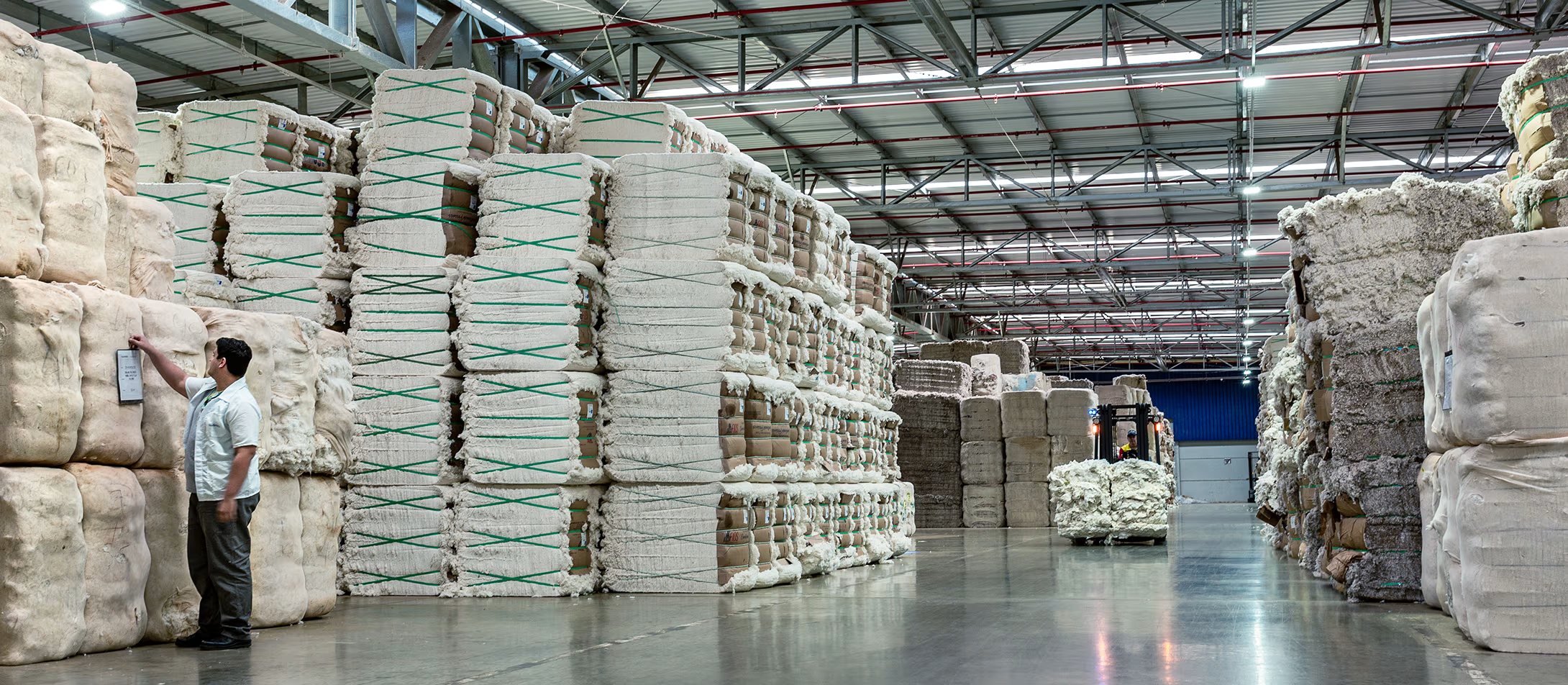
ABR certified cotton that is licensed by Better Cotton (BCI) is kept physically segregated from cotton of other origins throughout all stages of the production chain – from the field to the customer.

Each bale, lot or shipment is clearly identified and tracked to meet the growing demand from brands and consumers for products of proven sustainable origin, that have a commitment to rational water usage, reduction of chemical inputs, respect for workers’ rights, preserving biodiversity, in addition to other aspect
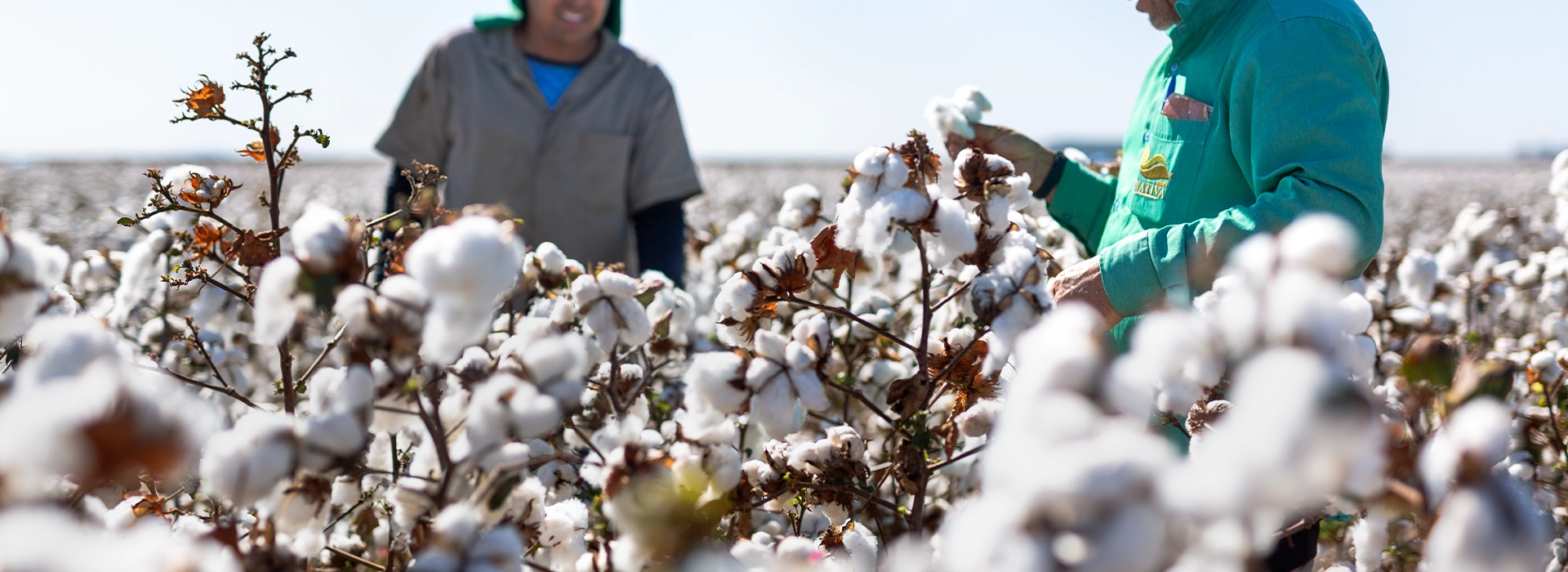
This process is directly supported by the Abrapa Identification System (SAI), created by Abrapa to ensure that traceability information at each production stage – growing, ginning and fibre testing – is accessible, together with ABR certification and BCI licensing data.
timeline

Since 2012, the Responsible Brazilian Cotton Program (ABR) has been developed to further strengthen good sustainability practices in the cotton supply chain. Over the past few years, a series of milestones have reinforced this process of continuous improvement, reasserting the certification’s level of excellence. 

Creation of the ABR Program

2012

Start of ABR/BCI benchmarking 

Brazil becomes the world’s largest producer of BCI cotton. 

2013

Creation of the Sou de Algodão (“I’m in Cotton”) movement

2015

The 6th World Cotton Research Conference is held with the support of ABRAPA.

2016

ABRAPA celebrates 20 years of existence. 

2019

Creation of ABR-UBA

Creation of Cotton Brazil, with a focus on the international market.

2020

Launch of Sou ABR

2021

Creation of ABR-LOG

2022

Brazil becomes the largest cotton exporter in the world.

2024

GOVERNANCE

The Responsible Brazilian Cotton Program (ABR) is managed by the ABR Institute, a private, non-profit, civil association whose objective is to provide traceability and transparency information on the Brazilian cotton production chain.

It is also responsible for the creation, implementation, development, coordination, and monitoring of programs, systems, and initiatives aimed at the adoption of good environmental, social and governance practices in the sector, in addition to promoting partnerships and educational activities.

The organizational structure of the ABR Institute consists of the following bodies:

General Assembly:

composed of associates and members of the Executive, Advisory, and Fiscal Councils.

Executive Board:

composed of a President, Vice-President, and Treasurer.

Advisory Board:

comprised of representatives from different parts of the cotton production chain.

Fiscal Board:

represented by three members appointed by the President.